
This December 2025 Tutor Update highlights clarification of sheltered water venue choices, professional standards, and factors to consider for effective rescue completion.
Summary
1. Paddlesport Leader (PSL) Venue Choices
Paddle Scotland reminds all Paddlesport Leader tutors of appropriate venue requirements for trainings and assessments. The Sheltered Water award remit is slow-moving rivers (where one can paddle upstream) or open water (lakes/lochs) within 200m of shore and wind not exceeding Beaufort force 3. Tutors must ensure scenarios reflect the remit, incorporate safety frameworks, and consider participant safety, especially during rescues. Assessments should take place at the top end of the remit, prioritising candidate and mock student safety. This follows reports of dangerous rescue incidents (e.g., near weirs, boats/paddlers stuck on stanchions). Paddle Scotland is offering optional, complimentary online Venue chat sessions for venue discussion and guidance.
2. Professional Standards
a. The Paddlesport Instructor and Stand Up Paddleboard Instructor Learner Development Packs are essential components of their respective courses. These packs are designed to support candidates in their learning by encouraging self-reflection on their practice and helping them pinpoint areas for development. Tutors and Providers must remember to emphasise the importance of this pack as a central element of the course and actively support candidates in using it as a tool for reflective learning. All Tutors and Providers must act as ambassadors, maintain professional standards, and present all course elements with respect, clarity, and enthusiasm to ensure a positive, high-quality learning experience.
b. Course Authorisation notes must be updated fully with the outcome for each candidate and justification, venue choice, and environmental conditions.
3. Rescue Considerations
BCAB has been made aware of some inappropriate approaches to how rescue training is set up and delivered and it is important to address the safety and safeguarding considerations within the delivery of both formal and informal rescue training.
It is paramount that those training others carefully consider the most appropriate and safeguarded process for matching off pairs in rescue sessions to prevent undue physical or emotional discomfort.
Full Update
1. Paddlesport Leader (PSL) Venue Choices
Paddle Scotland has become aware of some venue choice and use for Paddlesport Leader trainings and assessments that may not fit the criteria or spirit of the award, specifically around the slow moving water element.
All tutors are reminded that this Sheltered Water award is specifically designed for slow-moving rivers where paddlers can easily paddle against the current.
Paddlesport Leader venue requirements are Sheltered Water as defined in the BCAB Environmental Definitions and Deployment Guidance for Instructors, Coaches and Leaders.
As a reminder, the environmental definition for Sheltered Water is:
Ungraded sections of slow moving rivers where the group could paddle upstream against the flow (not involving the shooting of, or playing on, weirs or running rapids). Areas of open water (e.g. lakes and lochs) where the paddlers are no more than 200 metres offshore and the wind strength does not exceed Beaufort force 3, avoiding the group being swept/blown out of the safe working area. Slow moving estuaries (less than 0.5 Knots).
Examples: Smaller lochs or sheltered water section of lochs no more than 200m from the shore, slow moving rivers that candidates can paddle against which don’t include any white water elements. Small enclosed bays, enclosed harbours where there is minimal possibility of being blown offshore, defined beaches with easy places to land throughout, no tide races, overfalls or surf.
Note: The environmental definition implies normal conditions and care is advised when water and air temperatures are low.
The Assessment guidance makes it clear assessments should take place at the top end of the remit.
For further support and guidance we invite you to attend one of our free online Venue chat sessions.
What this means for you as a Tutor and what you need to know:
- To best prepare our candidates for success, aim to provide scenarios that accurately reflect the award requirements and incorporate suitable safety frameworks. Tutors are reminded about their responsibilities to deliver all awards to the expected standards and remits.
- Tutors should consider:
- The safety framework they put in place around their candidates to ensure their safety and the safety of mock students and other users.
- Where you are asking for rescues to happen, and ensuring it hits the requirements but doesn’t put anyone at additional risk (for example not above a weir where boats / people are likely to get stuck on stanchions or underwater hazards).
- Ensuring you clearly explain scenario / rescue requirements and check understanding before the rescue starts.
- We are going to run some online Venue discussion sessions over the coming months. We encourage you to attend one of these sessions. They are free to attend, likely to take no more than 45 minutes, and will give you 5 CPD points.
To book, log into your Just Go account and click the link (or search ‘PSL Venue Chat’ in Events & Courses).
2. Professional Standards
a. PSI / SUPI Learner Development Packs: A Consultation with learners has identified that some Paddlesport Instructor Providers may have been referring to the Paddlesport Instructor Learner Development Pack as ‘the boring bit’. The Learner Development Packs (for both Paddlesport Instructor and SUP Instructor) are an integral part of the course delivery, this language can unintentionally undermine the awards importance to learners.
We remind all our Providers and Tutors of their roles and responsibilities to present and act in a professional manner and act as an Ambassador for Paddle Scotland, Paddle UK, and British Canoeing Awarding Body.
b. Course Authorisation Notes: We would like to remind all providers of the importance of submitting complete and timely course notes following each course delivery.
Course notes support quality assurance, ensure transparency in assessment decisions, and provide essential evidence in the event of reviews, appeals, or audits.
They are a critical record and must include full and clear updates on the following:
- Candidate outcomes and justification. Please document each candidate’s outcome, including the rationale for decisions made and any supporting observations.
- Venue Choice. Outline the selected venue, including any relevant considerations.
- Environmental Conditions. Record conditions, including weather, water conditions, access, and any other environmental factors.
- Other significant information. Please ensure you provide notes on any other significant information, i.e. conflict of interests, special considerations, reasonable adjustments, or approvals from Paddle Scotland staff.
What this means for you as a Tutor and what you need to know:
- As Tutors/Providers, you are vital ambassadors for Paddle Scotland, Paddle UK, and the British Canoeing Awarding Body. Maintaining a high professional standard and setting a positive example is expected when delivering quality learning experiences.
- The presentation of all course elements - administrative, theoretical, or practical - should be conducted with enthusiasm and clarity. This approach sets a standard of professionalism, demonstrates the value of the programme, and supports learner confidence.
- Please remember that the language we use directly shapes learners' attitudes, impressions, and engagement.
- Adding good course notes to course authorisations is critical to ensure clarity, transparency, and compliance.
3. Rescue Considerations
Furthermore, providers, coaches, and leaders need to be reminded of the need to carefully consider and practice appropriate and safeguarded rescue methods beyond the primary technique, taking into consideration those you are training and what types of rescues are appropriate to practice and/or demonstrated to prevent undue physical or emotional discomfort.
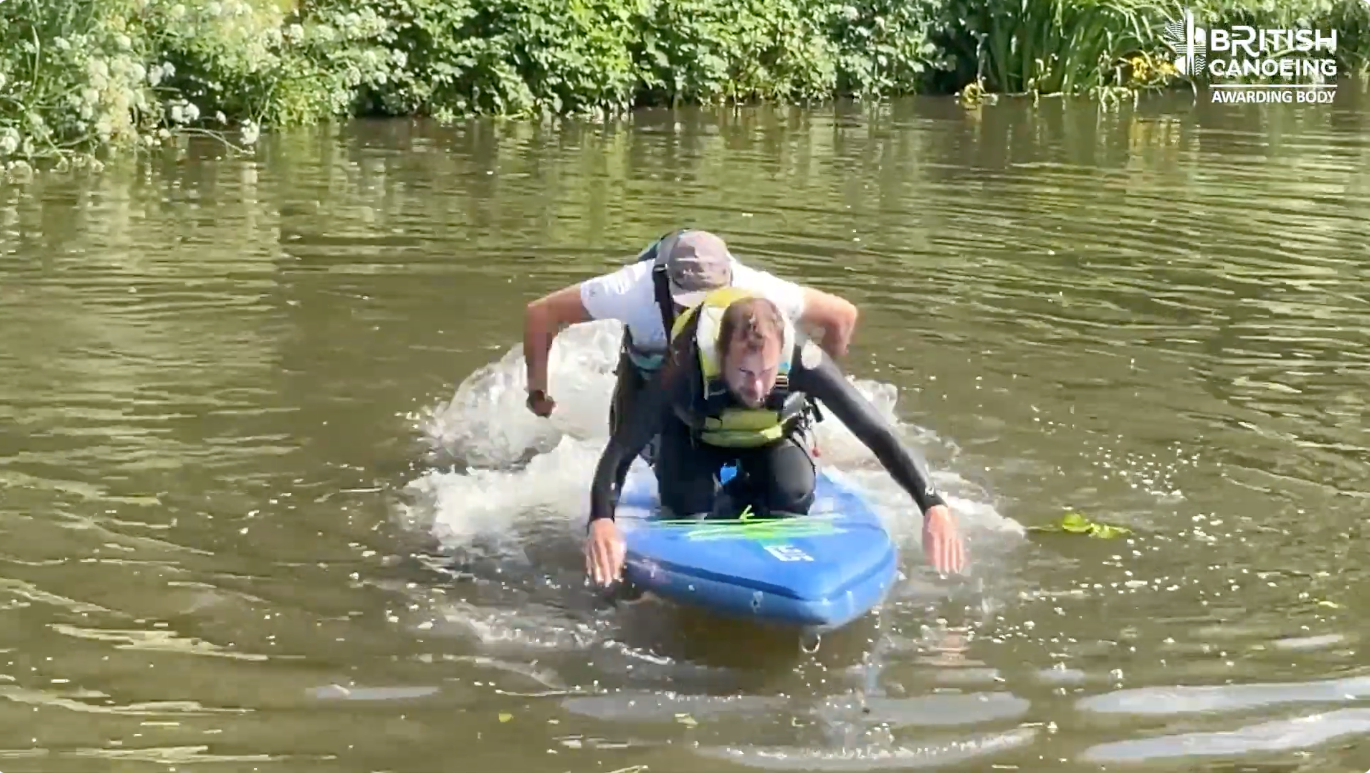
Prone Rescue Context: While the SUP Prone rescue position is a valid method, providers must also practice/show alternatives, such as the kneeling rescue, and assess which technique is appropriate given the different builds, environments, and competencies of those involved.
For visual clarification of an alternative technique, please refer to this resource. This method does reduce the close and uncomfortable proximity that a prone rescue on a shorter board can cause.
SHARE YOUR STORY
If you have a story that would be of interest to the Paddle Scotland team please get in touch with us...
Share Post
RECENT NEWS